

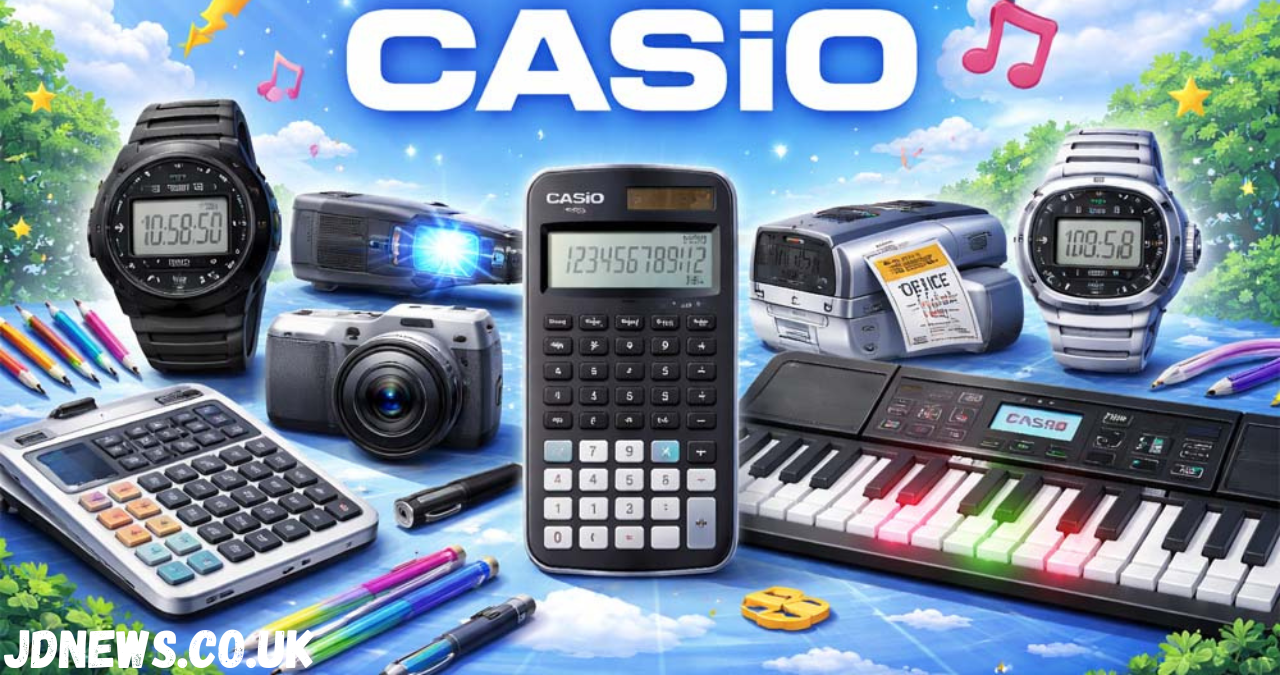
Casio is a world-renowned Japanese electronics brand known for redefining everyday technology through innovation, durability, and affordability. From digital watches to scientific calculators, the company has built a reputation for creating practical products that combine engineering excellence with user-friendly design. Over the decades, Casio has become a household name across the globe, trusted by students, professionals, athletes, and outdoor enthusiasts alike. Its philosophy revolves around making advanced technology accessible to everyone, not just premium markets.
What makes Casio unique is its ability to blend functionality with cultural relevance. Whether it is a classroom calculator or a rugged wristwatch worn by adventurers, Casio products are designed to solve real-world problems. The brand’s identity is deeply rooted in reliability, making it one of the most enduring electronics companies in history. Today, Casio stands as a symbol of innovation that bridges the gap between tradition and modern digital advancement.
Founding History and Early Innovation
Casio’s journey began in 1946 in Japan when the Kashio brothers founded a small engineering company focused on mechanical innovations. In the post-war era, Japan was rebuilding its industrial base, and Casio quickly emerged as a creative force in practical technology. One of its earliest inventions, the yubiwa pipe, demonstrated the company’s problem-solving mindset and helped fund its transition into electronics development.
By the 1950s, Casio shifted its focus toward calculators, marking a revolutionary turning point in its history. In 1957, the company introduced the world’s first compact all-electric calculator, transforming business operations and academic work worldwide. Unlike mechanical calculators, Casio’s electronic models offered speed, accuracy, and portability, making computation accessible to a much wider audience.
As the demand for digital tools increased, Casio expanded its research and development efforts. The company focused on miniaturization and affordability, ensuring that advanced computing tools could be used not only in corporate environments but also in schools and homes. This philosophy of democratizing technology became a defining feature of Casio’s global success.
Revolution of Casio Calculators
Casio calculators played a pivotal role in shaping modern education and business efficiency. During the 1960s and 1970s, Casio introduced a series of compact electronic calculators that dramatically reduced the cost and size of computing devices. These innovations made mathematical problem-solving faster and more accessible than ever before.
One of the most influential products was the Casio Mini, which became one of the world’s first affordable pocket calculators. It transformed classrooms and offices by replacing bulky machines with lightweight devices that could fit in a pocket. This innovation not only changed how people worked with numbers but also established Casio as a leader in consumer electronics.
Over time, Casio expanded its calculator lineup to include scientific and programmable models. These devices became essential tools in engineering, finance, and education. Their durability and ease of use made them especially popular in academic environments, where they remain widely used today. Casio’s calculators continue to represent precision, simplicity, and long-lasting performance.
Casio Watches: The Birth of G-Shock and Digital Icons
Casio entered the watch industry in the 1970s with a bold vision to reinvent timekeeping. The introduction of the Casiotron marked one of the first digital watches with automatic calendar functionality, setting the stage for future innovations. However, the real breakthrough came in 1983 with the launch of G-Shock, a revolutionary watch designed to withstand extreme conditions.
The G-Shock was developed by engineer Kikuo Ibe, who aimed to create an “unbreakable” watch after experiencing the frustration of breaking a personal timepiece. After years of experimentation and over 200 prototypes, Casio introduced a shock-resistant structure capable of surviving drops, water pressure, and intense impact. This design philosophy made G-Shock one of the toughest watches ever created.
Today, G-Shock has evolved into a global cultural icon. It includes multiple sub-lines such as Baby-G, Edifice, and Pro Trek, each targeting different lifestyles. From military personnel to fashion enthusiasts, G-Shock watches are worn for both functionality and style. Their popularity in movies, music, and street fashion has solidified Casio’s position in global pop culture.
Expansion Into Consumer Electronics
Beyond watches and calculators, Casio expanded into a wide range of consumer electronics. The company developed digital cameras, musical keyboards, label printers, and portable devices that further showcased its engineering versatility. Each product line reflected Casio’s commitment to compact design and practical innovation.
Casio keyboards, in particular, became widely used in music education and creative industries. Their affordability allowed beginners to explore music production without investing in expensive equipment. Similarly, Casio digital cameras introduced accessible photography to everyday users during the early digital imaging era.
This diversification strategy allowed Casio to remain relevant even as technology markets evolved rapidly. Instead of focusing on one product category, the company built a broad ecosystem of digital tools designed for everyday life.
Innovation Philosophy and Engineering Excellence
At the core of Casio’s success lies a strong innovation philosophy centered on durability, simplicity, and accessibility. The company is known for its “triple ten” concept in G-Shock design—10-meter drop resistance, 10-bar water resistance, and 10-year battery life. This reflects its commitment to building products that last.
Casio also prioritizes miniaturization and energy efficiency. Many of its watches include solar power, Bluetooth connectivity, and advanced sensors, while maintaining a compact and lightweight structure. This combination of technology and practicality is what sets Casio apart from many competitors.
Unlike luxury brands that emphasize aesthetics over function, Casio focuses on everyday usability. This approach has allowed the company to appeal to a global audience across different income levels and lifestyles.
Casio in Modern Culture and Lifestyle
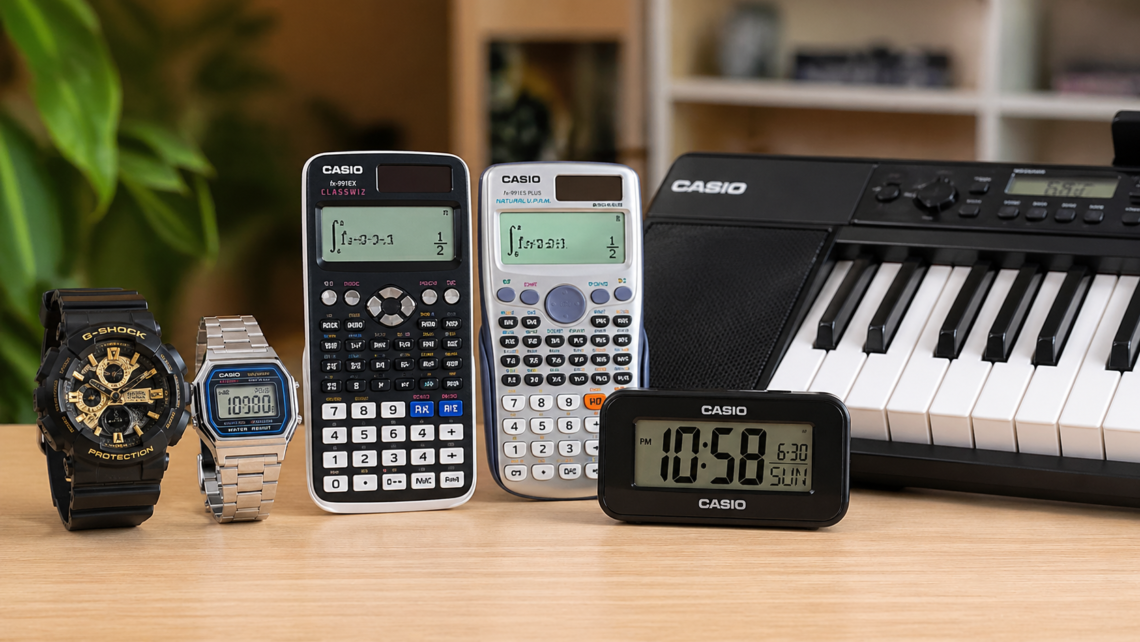
Casio products have become deeply embedded in global culture. From retro digital watches to modern G-Shock collaborations, the brand continues to influence fashion and lifestyle trends. Many celebrities and athletes wear Casio watches, further strengthening their popularity among younger audiences.
The resurgence of vintage digital watches has also boosted Casio’s cultural relevance. Models like the classic square G-Shock and calculator watches have become fashion statements in streetwear communities. Their nostalgic appeal, combined with modern reliability, makes them highly desirable.
Casio’s presence in movies, music videos, and pop culture has helped maintain its iconic status. The brand successfully bridges generations, appealing to both longtime users and new consumers discovering its legacy.
Challenges and Future Outlook
Despite its success, Casio faces challenges from modern smartwatch manufacturers and rapidly changing technology trends. Companies offering fully integrated smart ecosystems have created strong competition in the wearable technology market. However, Casio continues to innovate by blending traditional durability with modern features such as Bluetooth connectivity and hybrid digital systems.
Sustainability and environmental responsibility are also becoming important focuses for the brand. Casio is increasingly investing in energy-efficient technologies and long-lasting product designs to reduce electronic waste.
Looking forward, Casio is expected to continue evolving by merging classic design principles with advanced digital capabilities. Its ability to adapt without losing its identity will determine its long-term success in a competitive global market.
Conclusion
Casio’s journey from a small post-war Japanese workshop to a global electronics powerhouse is a story of innovation, resilience, and vision. Through its groundbreaking calculators, iconic watches, and versatile electronic devices, Casio has transformed how people interact with technology in everyday life. The brand’s commitment to durability and accessibility has made it a trusted name for decades. Whether in classrooms, workplaces, or outdoor adventures, Casio continues to prove that practical innovation never goes out of style.